Our Story
Four stages sit between a hide and a belt you stop thinking about. Here is what happens in each one, and why the decision was made that way.
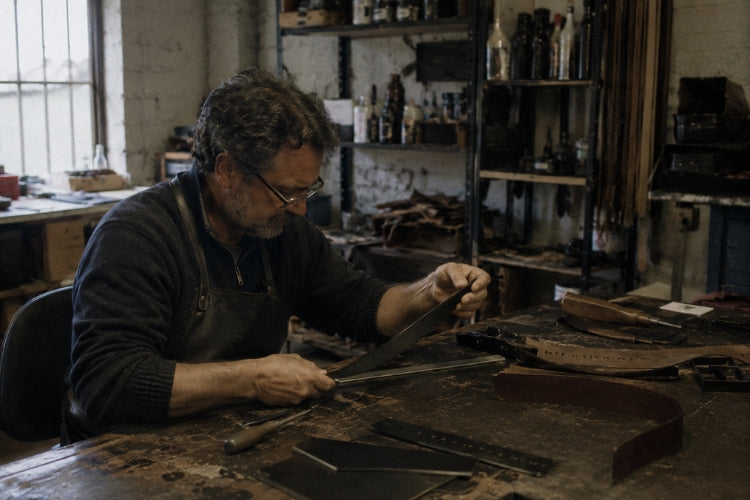
The Cut
Full-grain leather, cut from the firm part of the hide. The belly stretches, so it does not go into a belt. Every strap leaves at 150 cm, longer than anyone needs, because leather can be shortened and never added back.
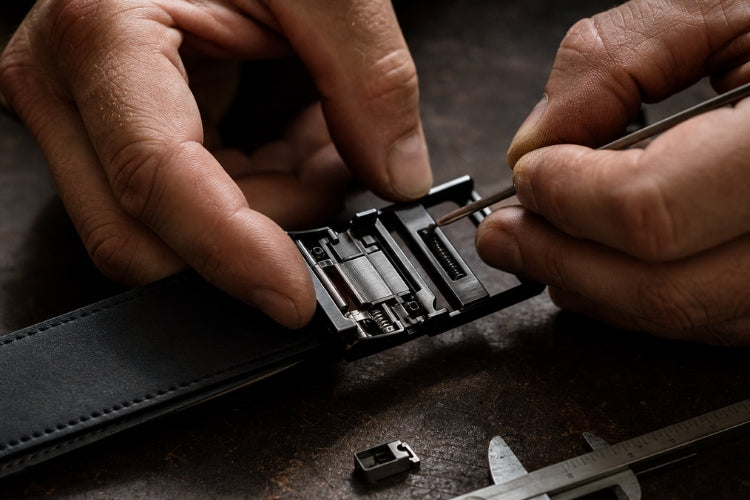
The Mechanism
Inside the buckle sits a small toothed lever that holds your waist size. In most belts it is cast from zinc alloy in an open housing: the alloy is not rated to carry load, and the lint coming off your own clothes grinds the teeth down. Ours is steel, and the housing is closed.
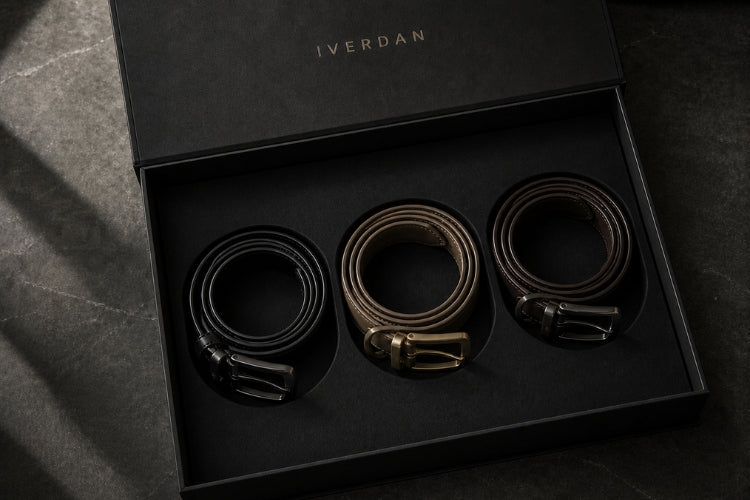
The Box
Three straps, three buckles and the fitting tool, packed flat. Nothing arrives needing a trip to a hardware store, which is something customers in this category have had to do.

The Fit
The track locks every 5 mm. A punched belt gives you a setting every 25 to 30 mm, which is why the right spot so often sits between two holes. Cutting the strap is part of fitting it, so a cut strap never voids a return.
We name the part we guarantee. Nobody else does.
See the line